Read time: 4 min
This week, a media company announced a merger with a nuclear fusion company.
Let that sink in for a second.
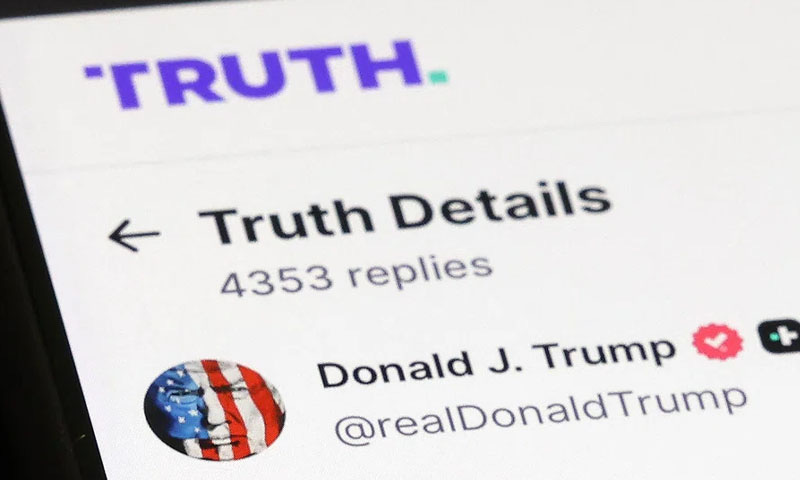
Trump’s social media business is merging with TAE Technologies , a private nuclear fusion company… 😳
This is, by far, the strangest deal I’ve seen in venture capital. And I don’t say that lightly.
At first, my reaction was visceral.
Is this a joke?
Because traditionally, this simply does not happen.
Media companies do not merge with deep hard tech.
And yet, the more I looked at it, the more it started to make sense.
Not in a clean way.
This deal is not about media. It’s about energy. The next two years will be defined by one constraint.
Energy.
Between 2026 and 2027, hyperscalers are going all in on AI infrastructure.
Compute is no longer the only bottleneck.
We are talking about demand on the order of 60 gigawatts.
This is not incremental growth.
We are already seeing grid instability in parts of the US near data center clusters.
Solar and wind help, but they do not scale fast enough at this magnitude.
So everyone is looking at the same shortlist.
Nuclear fission.
Nuclear fusion.
Fusion is no longer science fiction I can say this with confidence because I am deeply exposed.
I have five nuclear fusion companies in my portfolio.
I spend time with the scientists.
We are closer than most people realize.
There are now roughly fifty funded fusion companies globally.
Several credible teams are targeting net energy gain, Q greater than one, between 2027 and 2028.
That timeline matters.
Because if fusion works, even at small scale, it changes the power structure of the world.
Energy becomes abundant.
Why this deal suddenly makes sense Seen through that lens, this merger stops looking random.
It looks strategic.
Hyperscalers need energy.
Fusion sits at the intersection of all three.
If you are close to power, political or corporate, you want optionality here.
And this is where the deal becomes truly interesting.
Venture capital is mutating We are also witnessing a structural shift in capital.
Top Silicon Valley funds are no longer pure venture firms.
Early stage is now just one lever among many.
What is new here is not that capital is getting creative.
This is uncharted territory.
A media platform brings influence, narrative power, and political reach.
The unanswered questions are the most important ones.
Why would a fusion company accept this structure?
And why fusion, specifically, instead of a nearer-term cash-flowing asset?
The uncomfortable conclusion This may be the weirdest deal of the year.
But it may also be one of the smartest.
Because the defining factor of the next decade is not social media.
It is who controls the energy that powers AI.
As we move closer to AGI, energy becomes the real battleground.
Expect things to get weirder.
This deal is not an anomaly.
It is a preview.
Ready to go deeper? Some of my portfolio startups have raised their Series A and B rounds in the last months .
They didn’t just get lucky, they had an unfair advantage .
The right strategy. The right tools. The right data.
I’ve pulled together everything that actually worked for them : the tools, templates, and investor contacts those founders have used to raise enormous money.
📌 The Ultimate Investors List of Lists (12,000 VCs, FOs, Angels) The Investor List No One Talks About: 140 Family Offices 40 pitch decks that built Unicorns (how Airbnb, Coinbase, Canva got funded) The Ultimate Notion Data Room (all key docs you’ll EVER need) The Most Successful Investor Update Template The Only Finance Tracker Your Startup Needs SAFE Note Dilution Calculator & Cap Table Builder Co-Founder Agreement Templates + Legal Clauses You Can’t Forget
👉Subscribe to my Newsletter




.svg)

